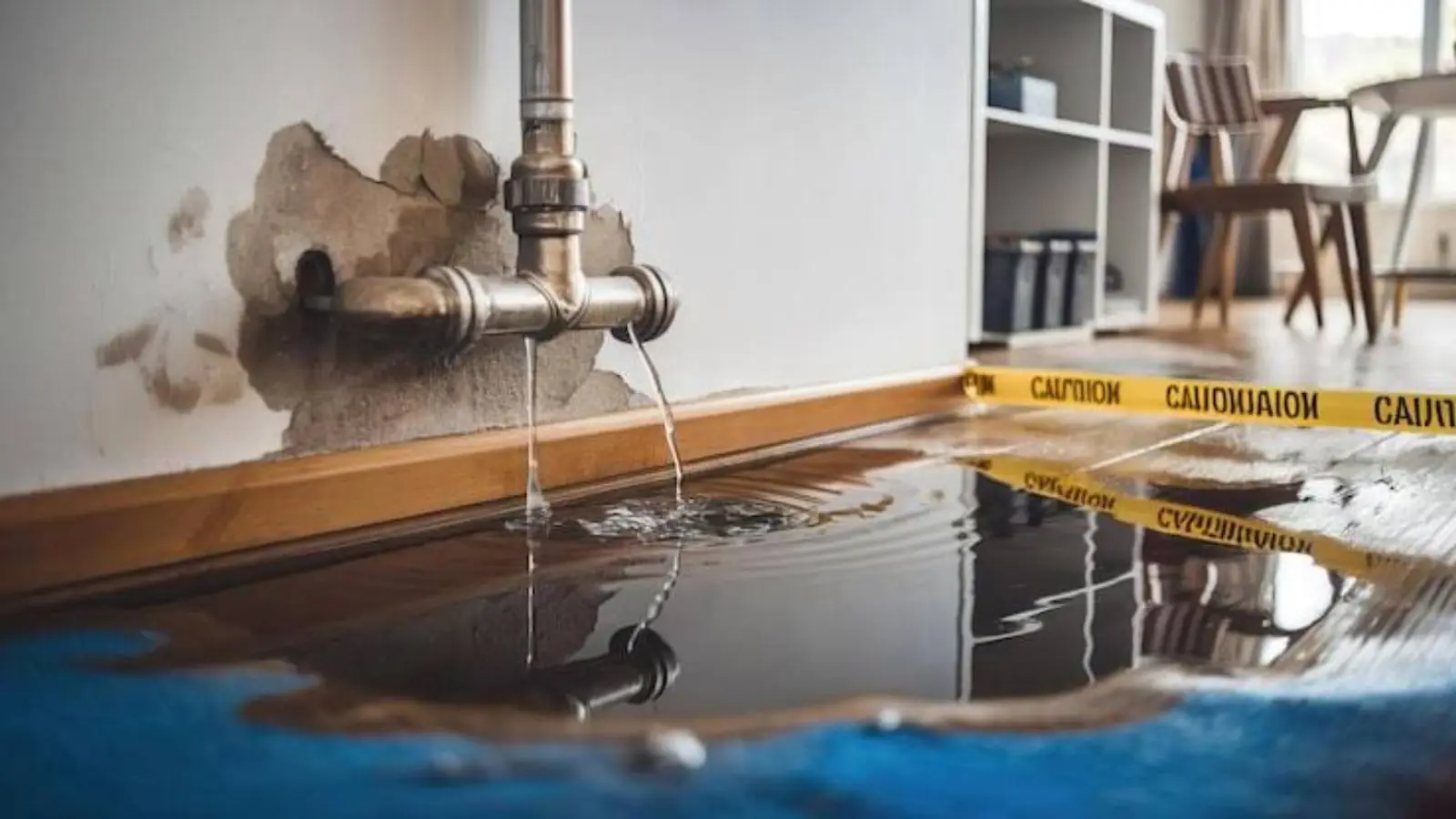
Burst pipe water damage in Tewksbury, MA is a first-hour problem. Close the main shutoff valve and everything else gets easier, because you can photograph, move valuables and phone for help while the water stops rising. A split supply line can dump gallons a minute, and drywall and insulation start soaking it up right away.
Below is the sequence, then the causes, the leaks you cannot see, and why the clock matters for water quality.
The first-hour sequence
Close the main shutoff
Find the valve where the water line enters the house, usually near the meter, the water heater or the basement wall, and turn it fully closed.
Relieve pressure if safe
Open the lowest faucet in the house to drain the lines. Skip this step if you would have to wade through water to reach it.
Handle power carefully
Switch off power to wet areas only if the panel is dry and you can reach it without stepping in water. Otherwise stay out and call.
Move valuables up
Lift documents, electronics, rugs and small furniture onto counters or upper floors.
Photograph everything
Capture the pipe, the water line on the walls and every wet room before cleanup begins.
Call the 24/7 line
Dispatch a crew with extraction units, air movers and moisture meters, then keep out of rooms with wet outlets.
Do not walk through standing water near outlets, extension cords or the panel. If water is rising toward the electrical box, stay out and call your utility or an electrician.
Know your main valve before you need it
Walk to the main valve today and make sure it turns. Stiff, old valves can seize, and finding one in the dark with water running is a bad time to learn that. Tag it with tape and tell everyone in the house where it is.
Your valve inside the house is the one you control. If the leak is on the street side, or you cannot close your own main, call the Town water emergency line listed on the Town of Tewksbury Water Sewer Division page. Our emergency water removal crews handle the water inside the building after the supply is off.
Why pipes fail
Freeze breaks
Water expands as it freezes, and the split often shows after the thaw. Pipes in exterior walls, garages, crawl spaces and unheated basements are the usual victims.
Fatigue and corrosion
Older copper, galvanized steel and fittings wear thin over decades. Pinhole leaks start small and can spray inside a wall for weeks.
Washer hoses and supply lines
Rubber braided hoses and plastic fittings fail without warning, often while no one is home. Callers often describe a toilet or sink supply line that let go.
Leaks in walls and ceilings you cannot see
Not every burst announces itself. Watch for a stained or bubbling ceiling, paint that blisters on a wall, a warm spot on a floor, the sound of running water with fixtures off, or a meter that keeps moving when nothing is on. A closet or bathroom ceiling that suddenly drips often traces to a line one floor up.
A crew confirms with a thermal imaging camera and a moisture meter, then opens only as much drywall as needed to follow the water. A plumber fixes the pipe itself. Massachusetts guidance says plumbing and electrical repairs belong with an experienced or licensed professional, and in some cases that is required.
Why time changes the water category
Water from a supply line starts as Category 1, a clean source. Under ANSI/IICRC S500 it does not stay that way. As it soaks carpet pad, drywall and insulation and sits, contaminants build, and it can slide to Category 2. Warm rooms and longer waits speed that slide.
That shift changes what can be dried in place and what has to be thrown out. Early extraction and water mitigation with air movers and LGR dehumidifiers keep more of your house on the dry side of that line.
When to call whom
Call the Town if the leak is on the street side. Call a plumber to repair the pipe. Call us as soon as water has reached floors, walls or ceilings, because drying cannot wait for the repair. Cost depends on the water category, the area affected, the materials involved, the number of drying days and any rebuild. Want your real number? Call (978) 252-8637.
What Tewksbury homeowners should know
The Town's Water and Sewer Division maintains more than 180 miles of water mains serving over 10,000 residential and commercial properties, and it publishes its own emergency line on the Town's web page. Save that page in your phone now. When a main breaks in the street, that is the call that gets the water shut off at the source.
Tewksbury sewer charges follow water consumption, so a burst pipe that runs through the meter can raise the sewer portion of the bill. Photograph the meter reading and the damage, and ask the Town Water and Sewer billing office whether any adjustment applies. Tewksbury sewage also flows to the Lowell regional utility, which matters only if the water in your home is sewage instead of a clean supply line.
If your property sits on the Andover side of the line, check which town's water division serves it. Our Andover page notes that town runs its own Water and Sewer Division.
Common questions about this topic
Shut the main valve where the water line enters the house. Then drain the lines from the lowest faucet if it is safe, protect electrical, move valuables up and photograph the damage.
Only if the panel is dry and you can reach it without stepping in water. If you cannot, stay out of the wet area and call an electrician or the utility.
Shut the main to slow the water, put a bucket under the drip, and keep out of the room if the light fixture is wet. A crew can trace the source with thermal imaging and open only what is needed.
It starts out as Category 1. As it soaks materials and sits, it can become Category 2. Early extraction and drying help keep more materials salvageable.
Yes. Water follows framing and insulation, so the visible stain is often the smallest part. Moisture meters and thermal imaging show how far it spread.
Call the Town water emergency line published on the Town of Tewksbury Water Sewer Division page. For water inside your home, call us.