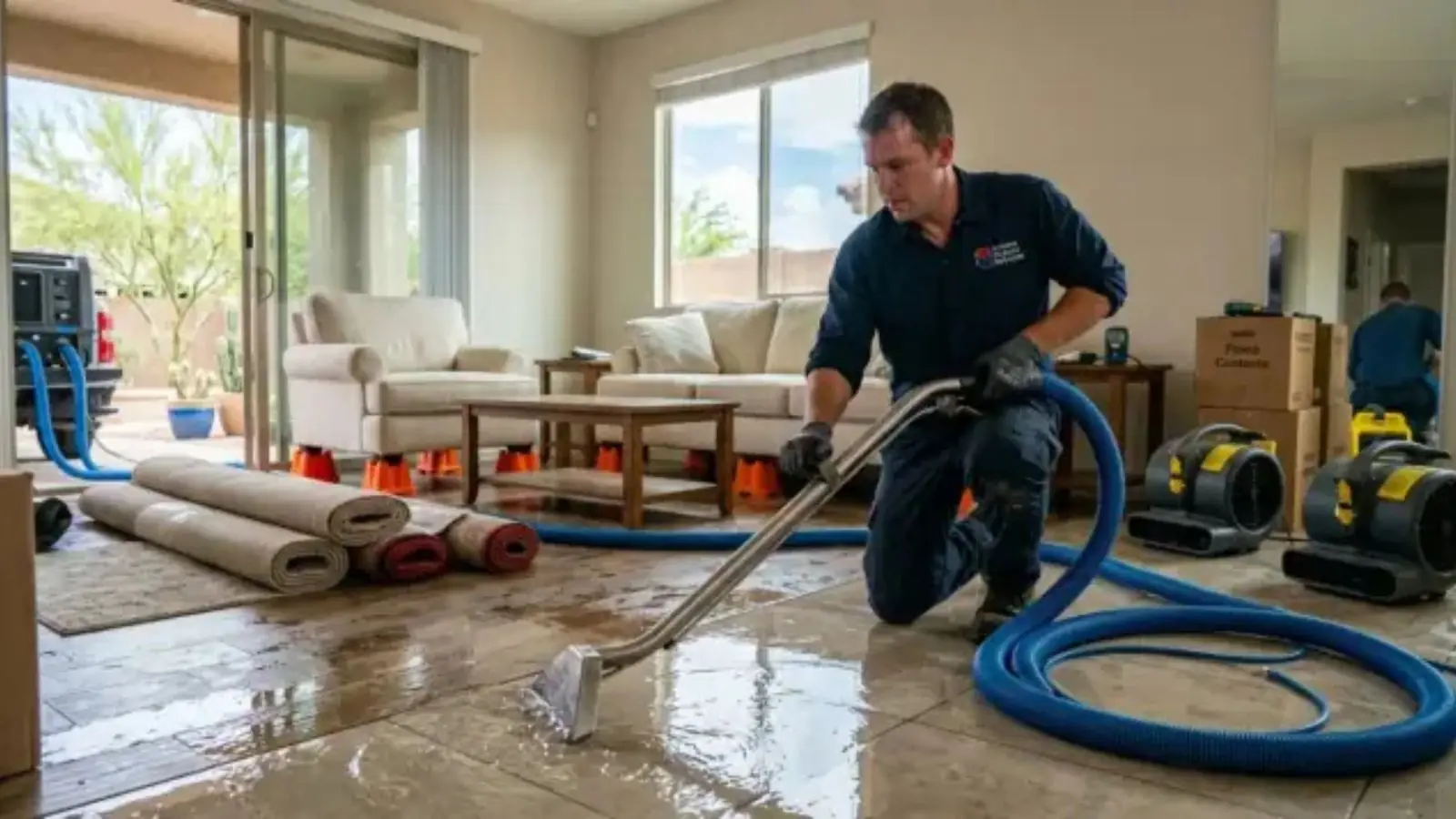
Standing water in a Tewksbury, MA home is an emergency, and our 24/7 dispatch line is open for it. While you wait, close the main water valve, stay out of the water if outlets or appliances are wet, and move valuables to dry ground. The industry reference for removal and drying is ANSI/IICRC S500, so ask any company how its crews apply it.
Emergency water removal means getting the water out of the building with pumps and extraction units before it soaks into subfloors and walls. It is the first physical step of water mitigation, and the speed of it sets how much of your home needs to be rebuilt.
When standing water is an emergency
A puddle you can mop is not an emergency. Water that covers a floor, keeps arriving, reaches outlets or crosses into another room is. So is any water that came from a drain, sewer or outdoor flooding.
- Water still arriving from a pipe, appliance or ceiling
- Water deeper than a shallow film across a room or a whole level
- Water touching outlets, cords, appliances or the electrical panel
- Gray or black water from a washing machine, toilet or sewer
- Water in a basement, crawl space or finished lower level
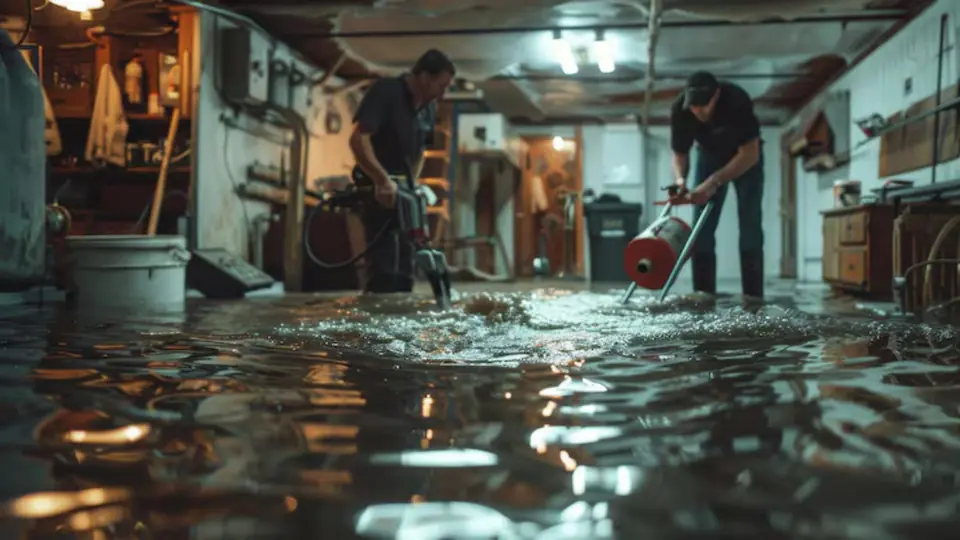
Burst pipe water damage
A burst pipe sends a large volume of water into walls and ceilings in minutes. Close the main shutoff first. If you do not know where it is, find it now, because the next leak will not wait for a search.
If the break is on the street side of your meter, it is the Town of Tewksbury Water and Sewer Division's line, and the Division publishes its own emergency contact on its web page. For breaks inside your house, we handle the water and a plumber fixes the pipe.
Burst pipes in cold weather often split along a seam where ice expanded. Hidden breaks inside a wall may only show up as a damp patch or a rising water bill, so moisture mapping after removal confirms where the water traveled.
Crawl spaces, basements and whole-level flooding
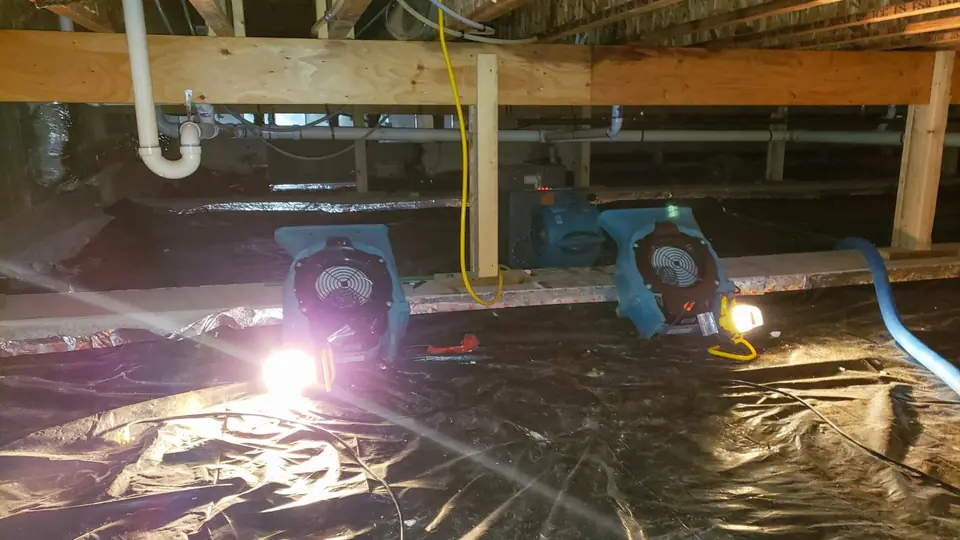
Water in a crawl space or basement is hard to see and slow to dry. We use submersible pumps and extraction units for depth, then move to air movers and dehumidifiers once the floor is clear.
If the water came from groundwater, sump pump failure or river flooding, flood damage restoration covers the contamination and cleanup that follow. If the loss is bigger than a single room, call before you start moving things.
What happens after the water is out
Pump and extract
Standing water is pumped off, then extraction units lift water from carpet, pad and hard floors.
Check the structure
Moisture meters and thermal imaging find where water went into walls, ceilings and subfloors.
Dry
Air movers and dehumidifiers take over. Readings guide how long they stay.
Move to cleanup and repair
Damaged materials are removed and the rebuild is scoped in writing.
Removal alone does not finish the job. Water left in a subfloor or wall will drive mold and rot, which is why removal is paired with drying on every call.
What affects price
Removal scope depends on how much water there is and where it went. A garage with an inch of water is a different job from a flooded finished basement.
- Depth and volume of water
- Water category and any contamination
- Affected area and the materials soaked
- Time since the loss
- Equipment and drying days that follow
We explain scope and price before work starts. Call (978) 252-8637, and check your policy because sudden and accidental water damage is often covered while flood needs separate coverage.
We cover the towns around Tewksbury
Removal calls come in from Billerica and Lowell as well. Our water damage cleanup service picks up once the water is out.
Common questions about water removal
Yes. Dispatch is open 24 hours a day, every day. Call, describe the water and follow the safety steps. We do not promise an arrival time.
Same-day response is available when crews are free. Once on site, pumps and extraction units remove water quickly, and the remaining moisture is dried over the following days.
Yes. We use pumps and extraction units for depth, then dry the space. Persistent seepage is a waterproofing problem, which is a separate trade.
Only if the panel is dry and you can reach it safely. If water has reached outlets or the panel, stay out and call the utility or 911 about any electrical or gas risk before you call us.
A plumber repairs the pipe. We remove the water and dry the structure, and we can work around the repair schedule.
A wet vacuum handles small spills. Water that soaked carpet pad, subfloor or walls needs extraction units and structural drying.