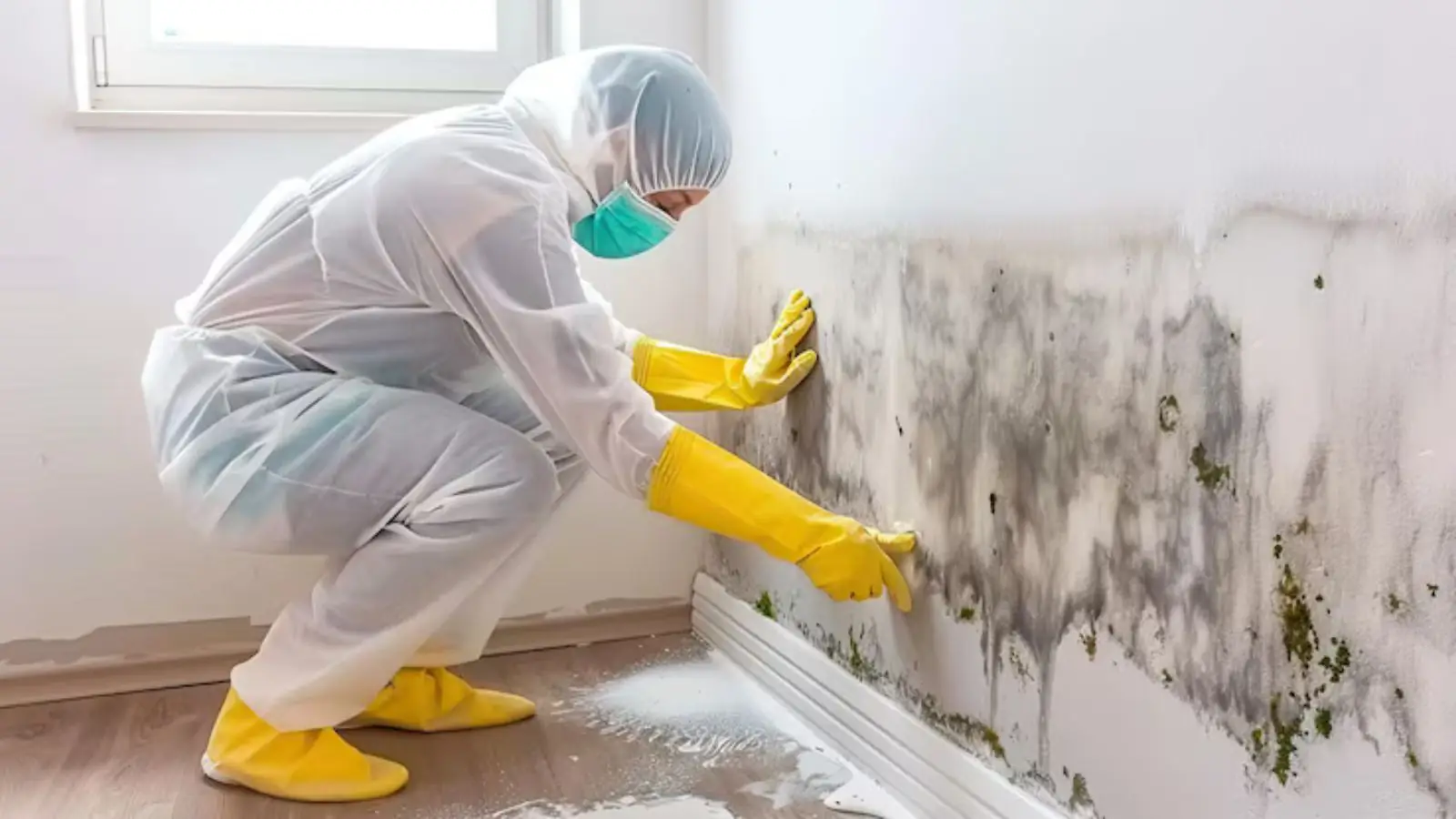
Mold clean up in Tewksbury, MA starts with two questions: where is the moisture coming from, and how big is the patch? A small surface spot on a hard material can often be cleaned with detergent and water. Anything over 10 square feet, or anything hidden, is a job for professionals.
Most calls we hear describe the same handful of situations. A closet wall under an upstairs leak, a bathroom ceiling corner, a drip line from an air conditioner, the back of a couch that sat against an outside wall, a corner of lifted carpet. Here is how to size each one up.
Fuzzy spots in the house: five usual places
Closet after an upstairs leak
Water follows a pipe or a wall cavity and shows up at the closet baseboard or shelf. The growth is on the surface, but the drywall behind it is probably wet.
Bathroom ceiling above the shower
Steam condenses on the coolest surface. If an exhaust fan is weak or vents into the attic, the corner stays damp and darkens.
AC condensate line backing up
A clogged drain pan or line drips onto a ceiling or air handler closet. Look for staining under the unit and a wet pan.
Behind pulled-away furniture
Air barely moves behind a dresser against an exterior wall. Cold wall plus indoor humidity gives you a damp patch you did not see for months.
Under lifted carpet
A damp pad holds water against the tack strip and subfloor. If the carpet smells sour when you peel back a corner, the pad is wet.
Fix the moisture first, then decide on the cleanup
The Massachusetts Department of Public Health homeowner guide says to find the water source and fix it, or mold will not stop growing. A cleaned wall that stays wet is a wall that grows mold again. So the first job is a plumber for the supply line, a technician for the AC drain, a fan for the bathroom, a gap behind the furniture.
Then dry. The guide says wet areas should be completely dried in 24 hours, and under the Massachusetts housing code areas exposed to leaks must be dried within 48 hours. Fans, open windows and a dehumidifier are the home tools. If a surface is still damp after two days, bring in a moisture meter reading.
Small and cleanable, or call a crew?
| Situation | Likely path | What to do |
|---|---|---|
| Under 10 square feet, on a hard surface like tile, sealed wood or painted trim | Homeowner cleanup is possible | Wipe with detergent and water, dry fully, fix the source. |
| Under 10 square feet but on drywall, ceiling tile or carpet | Porous material usually has to be removed | Call to have it cut out and the cavity checked with a meter. |
| Over 10 square feet | Professional remediation | Per the DPH guide, call a pro with containment and HEPA filtration. |
| Growth you cannot see, a smell with no visible source | Professional inspection | Moisture mapping and a thermal imaging camera find wet cavities. |
| Anyone in the home with asthma or a weakened immune system | Professional cleanup | The DPH guide says these people should not do the cleanup. |
What not to do
- Do not paint over it. Paint hides the stain and leaves the moisture and the growth underneath.
- Do not scrub with a dry brush or sweep. It throws spores into the air and across the room.
- Do not mix bleach with ammonia. The fumes are dangerous. If you use bleach at all, the DPH guide caps it at 1 cup of laundry bleach per gallon of water.
- Do not aim a fan at the patch before you have decided whether to call. It can push spores into other rooms.
- Do not disturb more than 6 square feet of painted interior surface without asking about lead-safe rules.
When a lender or a buyer wants it cleared
Callers often tell us a lender or a buyer wants mold cleared before a sale. In that case, the usual step after remediation is independent clearance testing: a third party who did not do the cleanup inspects the area and may sample air or surfaces, then reports whether it meets the criteria set for the job.
Independent matters, since the company that removed the mold should not be the one grading its own work. We cannot say whether any particular lender or buyer will accept a given report, so ask them what they require in writing before you schedule anything.
Service pages that cover this work
Our mold remediation service handles containment, removal and drying for mold, while water mitigation covers the structural drying that has to happen first when a leak caused it. Mold needs moisture, remediation follows the S520 standard, and health questions belong with a physician.
What Tewksbury homeowners should know
Plumbing, electrical and structural repairs after a leak should be done by an experienced or licensed professional, and in some cases must be, according to the DPH guide. If cleanup means replacing a wall section, ask the Tewksbury Building Department whether the repair needs a permit. The Town's permit page does not list which repairs do.
Older Tewksbury houses may have several layers of paint on ceilings and trim. The state guide notes that disturbing more than 6 square feet of painted interior surface triggers lead-safe renovation rules, so mention the age of your home when you call for a cleanup quote.
Homeowners across the line can read about Billerica and Andover too, since leaks and condensation behave the same in every town.
Common questions about this topic
The state guide says mold can usually be cleaned from hard surfaces with detergent and water. If you do use bleach, use no more than 1 cup of laundry bleach per gallon of water and never mix it with ammonia. Porous materials like drywall and carpet generally need removal.
The DPH guide says wet areas should be completely dried in 24 hours, and the EPA says drying within 24 to 48 hours usually prevents mold growth. Use fans and a dehumidifier, and call a crew if the surface stays damp.
It is an inspection, and sometimes air or surface sampling, by an independent third party after remediation. It checks the work against the criteria in the scope. It is separate from the company that did the cleanup.
The DPH guide does not recommend routine mold testing. If you can see mold, clean it and fix the moisture source. Testing is more often used after remediation, for clearance.
Usually the surface is still getting wet from a leak, condensation or a poorly vented fan. We cannot promise any cleanup will prevent regrowth, but removing the moisture source is what gives it a better chance.
If it is under 10 square feet on painted drywall and the ceiling is dry, some homeowners handle it. If the paint bubbles, the drywall feels soft or the fan vents into the attic, have it checked.
Ask the Tewksbury Building Department at 1009 Main Street whether the repair needs a permit. Building, electrical and plumbing permits go through the Town's online portal, and the Town's page does not list which repairs require one.