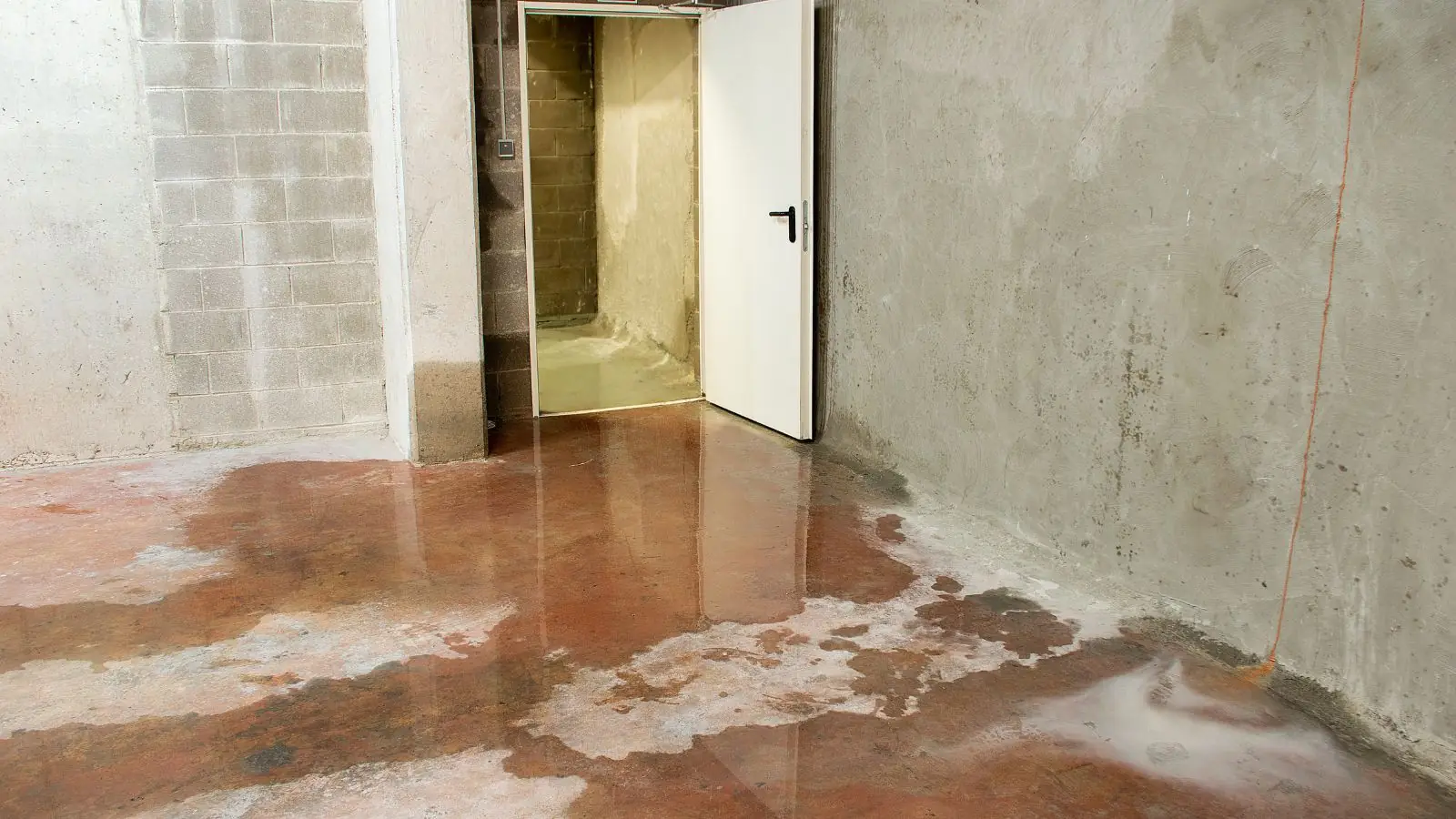
For mold removal from a basement in Tewksbury, MA, call a mold remediation contractor to clean and dry what is affected, and call a waterproofing or foundation specialist if water keeps coming in. These are two different jobs, and many basements need both in the right order.
We are a dispatch network of licensed and insured restoration professionals. That means we can send crews who remove mold, dry the structure and set containment. We do not pour footings, install drain tile or repair a cracked foundation wall, and any honest company will say the same.
Musty smell, spotted walls, damp floor: which trade is this?
A musty smell near the stairs, dark spotting on a block wall or fuzzy growth on stored cardboard tells you moisture has been present for a while. The trade term for fixing the growth and the damage around it is mold remediation, and it follows the ANSI/IICRC S520 standard.
Remediation answers the question of what to do about the mold and the wet materials. It does not answer where the water came from. Finding that source is step one, because the Massachusetts Department of Public Health guide is plain on this point: fix the moisture source or mold will not stop growing.
Common basement moisture sources
- Sump pump failure: a dead pump, a stuck float switch or a power outage lets groundwater rise over the slab.
- Groundwater after heavy rain: water pushes through cracks and the joint where wall meets floor.
- Humidity and condensation: warm summer air meets cool block walls and cold-water pipes, and the surface stays wet.
- Plumbing and appliance leaks: a water heater, washer hose or upstairs supply line dripping into the ceiling.
- Exterior drainage: downspouts that empty beside the foundation, or soil that slopes toward the house.
A dehumidifier helps with humidity and condensation. It will not stop groundwater coming through a wall, and a basement that needs a dehumidifier running constantly is telling you something about airflow or drainage.
What restoration covers and what it does not
| Problem | Who handles it | Why |
|---|---|---|
| Mold on drywall, framing, carpet or stored items | Mold remediation contractor | Removal, cleaning, drying and containment fall under S520 practice. |
| Wet insulation, baseboard or drywall after a flood or pump failure | Water restoration crew | Extraction and structural drying come first, before mold has time to settle in. |
| Water seeping through a wall or floor crack | Waterproofing or foundation trade | Sealing, drain systems and structural repair are not part of remediation. |
| Failed sump pump or discharge line | Plumber or waterproofing trade | The pump and its discharge are mechanical systems that need an installer. |
| Gutters and grading | Roofer, grading contractor or general contractor | Redirecting roof water away from the house is exterior work. |
If a company promises to solve a constant seep with a coat of sealant and some cleaning, ask who is fixing the leak. Remediation that ignores the source tends to be remediation you pay for twice.
How containment and air filtration work
When crews disturb mold, spores go airborne. To keep them out of the rest of the house, technicians hang plastic sheeting over the work area and run a HEPA air scrubber, which pulls air through a filter and exhausts it outside or back into the contained zone. A negative air setup keeps the pressure lower inside the work area so air moves in, not out.
Then comes the removal itself: porous materials like wet drywall and carpet are bagged and taken out, hard surfaces are HEPA vacuumed and cleaned, and dehumidifiers and air movers dry whatever remains. Ask for the plan in writing, including what is being removed.
What you can do before anyone arrives
- Turn off the power to a flooded basement if you can reach the panel without stepping in water. Otherwise stay out and call.
- Stop the source if it is a plumbing leak by closing the shutoff valve.
- Move dry belongings upstairs and keep children and pets out of the area.
- Run a dehumidifier and open upstairs doors to circulate air.
- Photograph the damage and the source for your records.
Never enter a basement with standing water if outlets, an electrical panel or an appliance could be submerged. Sewage from a floor drain is a Category 3 hazard that needs a professional.
When to call a pro for the mold itself
The DPH guide says professionals perform remediation for mold-affected areas more than 10 square feet. Hidden mold behind paneling or inside a wall is also a reason to call. People with asthma or weakened immune systems should not do the cleanup, and health questions go to a physician, not a contractor.
Our mold remediation service covers containment, removal and drying. If water is still in the basement now, flood damage restoration comes first, since mold work on a wet structure has to wait for the drying.
What Tewksbury homeowners should know
Three rivers touch Tewksbury: the Merrimack to the north, the Shawsheen through the south end and the Concord to the southwest. In March 2010 the National Weather Service reported the Shawsheen at Wilmington reaching a record 10.59 feet and the Concord at Lowell a record 9.74 feet. That does not say anything about your street, but it shows these rivers can rise high, so check the FEMA flood map for your address.
Standard homeowners policies generally do not cover flood damage, according to the Massachusetts Division of Insurance. Some coverage may exist through an endorsement for sump pump failure or water backup, so look at your declarations page or ask your agent before the next storm, not after.
Neighbors with similar groundwater concerns can read our pages for Wilmington and Lowell, where those two gauges are.
Common questions about this topic
No. Remediation cleans and dries the mold and the damaged materials. A wall that seeps after rain needs a waterproofing or foundation trade to stop the water, and that work usually comes before or alongside the cleanup.
A dehumidifier lowers humidity, which helps when condensation is the cause. It does not remove mold that is already growing on drywall or framing, and it cannot stop water entering through a crack.
Shut off power if it is safe, stop adding water, and call for extraction and drying quickly. Drying within 24 to 48 hours usually prevents mold growth, per the EPA. Then see a plumber about the pump.
Measure the visible patch, then add what a moisture meter finds behind it. The DPH guide points to professionals for areas over 10 square feet, and a wall with a hidden wet cavity counts for more than the surface suggests.
Color does not identify a mold. A remediation plan works the same way for any growth: fix the moisture, contain, remove, clean and dry, following the S520 standard.
Plastic sheeting sealed over doorways and openings, a HEPA air scrubber running, negative air where the layout allows, and a clear path for bagged debris. Ask the contractor to describe it before work starts.
Yes. The FEMA Flood Map Service Center is where you check a property's flood zone. We cannot state a zone for any address, so look yours up and ask your insurer what applies.