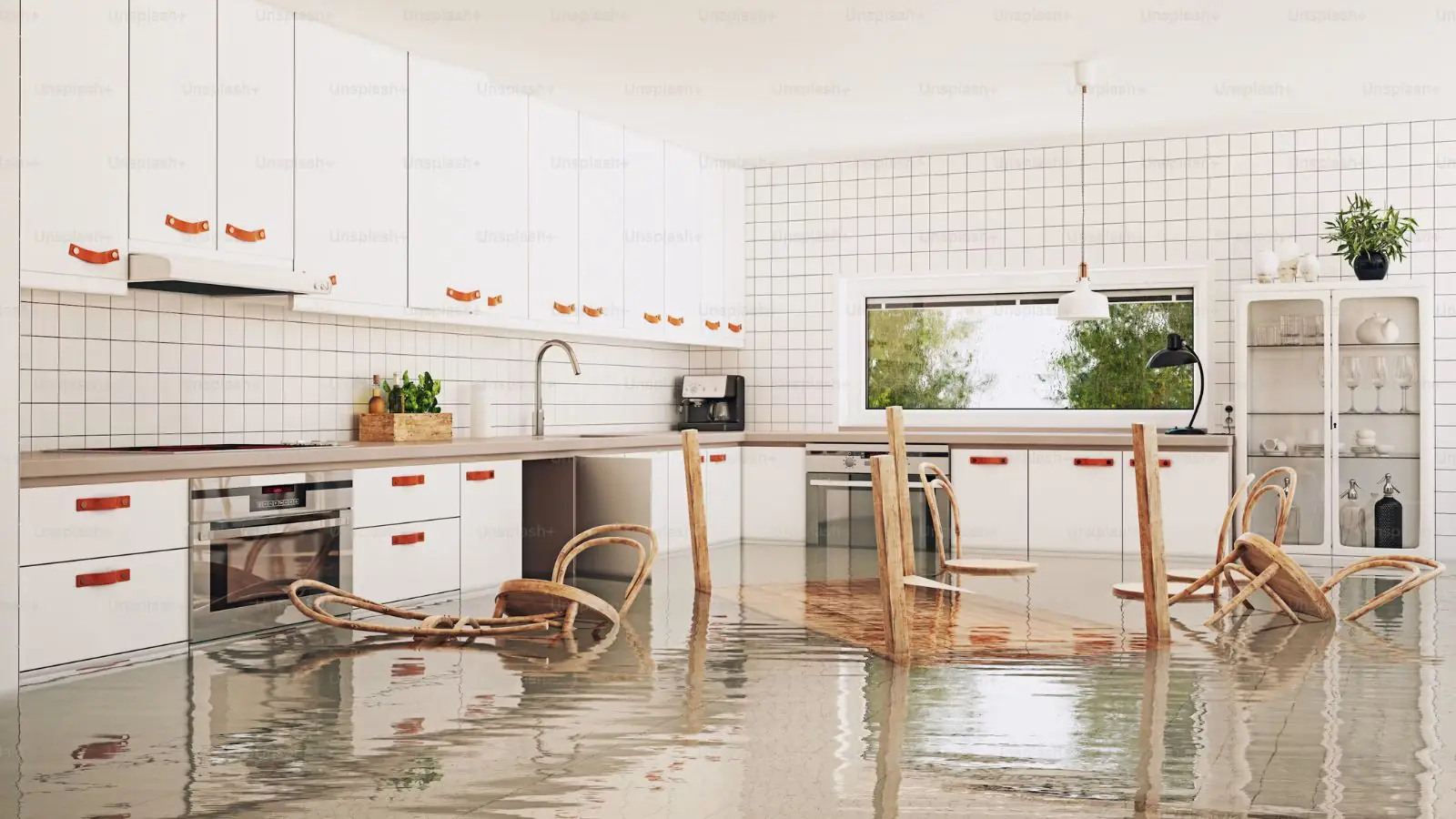
A refrigerator leak looks small until you pull the fridge out. Refrigerator leak water damage cleanup in Tewksbury, MA starts with the same three moves: shut off the water, unplug the unit, and get the standing water up before it travels under the flooring and into the cabinet toe kicks.
Most fridge leaks are Category 1 clean water, coming from an ice-maker supply line or a clogged defrost drain. Clean does not mean harmless for long. Left alone, that water soaks the subfloor and cabinet bases and can become a bigger problem if it sits.
Where fridge leaks actually come from
The ice-maker or water-dispenser supply line is the usual suspect. It is a thin plastic or braided line behind the unit, and a kinked or loose fitting can seep for weeks. The second source is the defrost drain, which can freeze or clog and send meltwater into the drain pan, then onto the floor.
A cracked water filter housing or an overfull drain pan can also leave a puddle that looks like a plumbing failure.
The first hour
Cut the water
Close the small shutoff valve on the supply line, usually under the sink or in the basement below the kitchen. If you cannot find it, use the main shutoff.
Unplug the fridge
Only if the outlet and the floor around it are dry. If water reaches the outlet or the cord, turn off the kitchen breaker first and do not step in the puddle.
Move food
Put perishables in a cooler. A closed fridge holds cold for a few hours, but a leak is a good reason to empty it.
Extract the water
Mop and towel up what you can, or use a wet vac for standing water. Pull up rugs and mats and prop them off the floor.
Take photos
Photograph the water, the wet floor and the supply line before cleanup. Your insurer may ask for them.
Pulling the fridge out safely
Fridges are heavy, and a full one is awkward on wet flooring. Empty it, close the doors with tape, and slide it straight out with a helper. Use furniture sliders or a piece of cardboard under the feet to protect vinyl and hardwood. Do not tilt it onto its side, since compressor oil can run where it should not.
Once it is out, look at three places: the back wall behind the fridge, the floor under the unit, and the toe kick of the cabinets beside it. Toe kicks are thin panels, and water that wicks into them can hide for weeks behind the cabinet face.
Drying the flooring, cabinets and subfloor
Water moves along the lowest path. Under a fridge, that is usually under the flooring and toward the nearest cabinet base. Laminate and engineered wood swell at the seams. Vinyl plank can trap water underneath. Solid hardwood cups as it takes on moisture.
A moisture meter shows where the water went. Crews read the floor, the toe kicks, the lower cabinet boxes and the wall base, then set air movers across the area and add an LGR dehumidifier to pull moisture from the air. For water trapped under flooring, they may use a mat system or lift a few boards to let it dry from above and below.
Our water damage cleanup page describes a typical kitchen job from extraction to final readings. Homeowners in Chelmsford and Lowell use the same process through their own town pages.
When hidden moisture means call a pro
| What you see | What it can mean | Your move |
|---|---|---|
| Puddle wiped up, floor feels dry | Water may still be under the flooring | Check with a meter, run a fan, recheck in a day |
| Floor edges lifting or seams swelling | Water reached the subfloor | Call for moisture mapping and drying |
| Musty smell near the fridge | Moisture trapped in the toe kick or wall base | Call a pro. Do not rip out cabinets yourself |
| Dark stain or soft cabinet base | Water sat for days | Call for assessment and possible removal |
| Leak ran for an unknown time | Wet materials past the first 48 hours | Call right away and mention how long |
Appliances, outlets and wet floors are a poor mix. If water reached an outlet, the fridge cord or the wiring behind it, shut off the breaker and have an electrician check it before you plug anything back in.
Why a clean-water leak still needs drying
The EPA guidance is that drying wet materials within 24 to 48 hours usually prevents mold growth. The Massachusetts DPH mold guide says wet areas should be dried within 24 hours. A slow fridge leak often runs unnoticed for days, which means the clock may already be past that window by the time you find it.
Mold needs moisture, and a wet subfloor under the kitchen is a steady supply. If you can see growth, clean small hard-surface areas with detergent and water. For anything larger or hidden, call a professional.
For widespread wetting that reaches several rooms, water mitigation crews map the wet area and set equipment before rebuild begins.
Cost factors for a fridge leak cleanup
Price depends on how far the water traveled, how long it sat, the flooring type, whether cabinets need drying or removal, and how many days of air movers and dehumidifiers the readings call for. A quick surface cleanup costs far less than a subfloor that needs lifting.
Want your real number? Call (978) 252-8637 and tell us the flooring, how long the leak ran and where you found water.
Tewksbury water, sewer billing and the meter
Tewksbury's drinking water comes from the Merrimack River and is run by the Town's own Water and Sewer Division. Sewer charges are based on water consumption, so a leak that ran through the meter can raise the sewer portion of the bill too. Ask the Town Water and Sewer billing office whether any adjustment applies to your account.
That is a practical reason to keep your repair invoice and photos. Read your water meter before and after you shut off the supply, and note the dates. If the meter keeps moving with every fixture off, you have another leak somewhere in the house.
Common questions about this topic
Shut off the water supply to the fridge, unplug it if the outlet area is dry, and get the standing water up with towels or a wet vac. Then pull the unit out and look at the floor, the toe kicks and the wall behind it.
Usually yes. Supply line water is Category 1 under the S500 standard. If it sits and soaks into materials for days, it can become Category 2, which changes how the cleanup is handled.
It can. Water spreads under the boards and causes cupping or swelling. Dry the floor fast, and have a meter reading taken before you decide whether the boards will settle on their own.
Water may be trapped under the flooring or inside a cabinet toe kick. A moisture meter and a thermal imaging camera can find it without tearing everything out.
Sudden and accidental water damage is often covered, while slow leaks over time often are not. Check your policy or ask your insurer. We cannot say what any policy will pay.
It can. Tewksbury sewer charges are based on water consumption, so extra water through the meter can raise both parts. Ask the Town Water and Sewer billing office whether an adjustment applies.