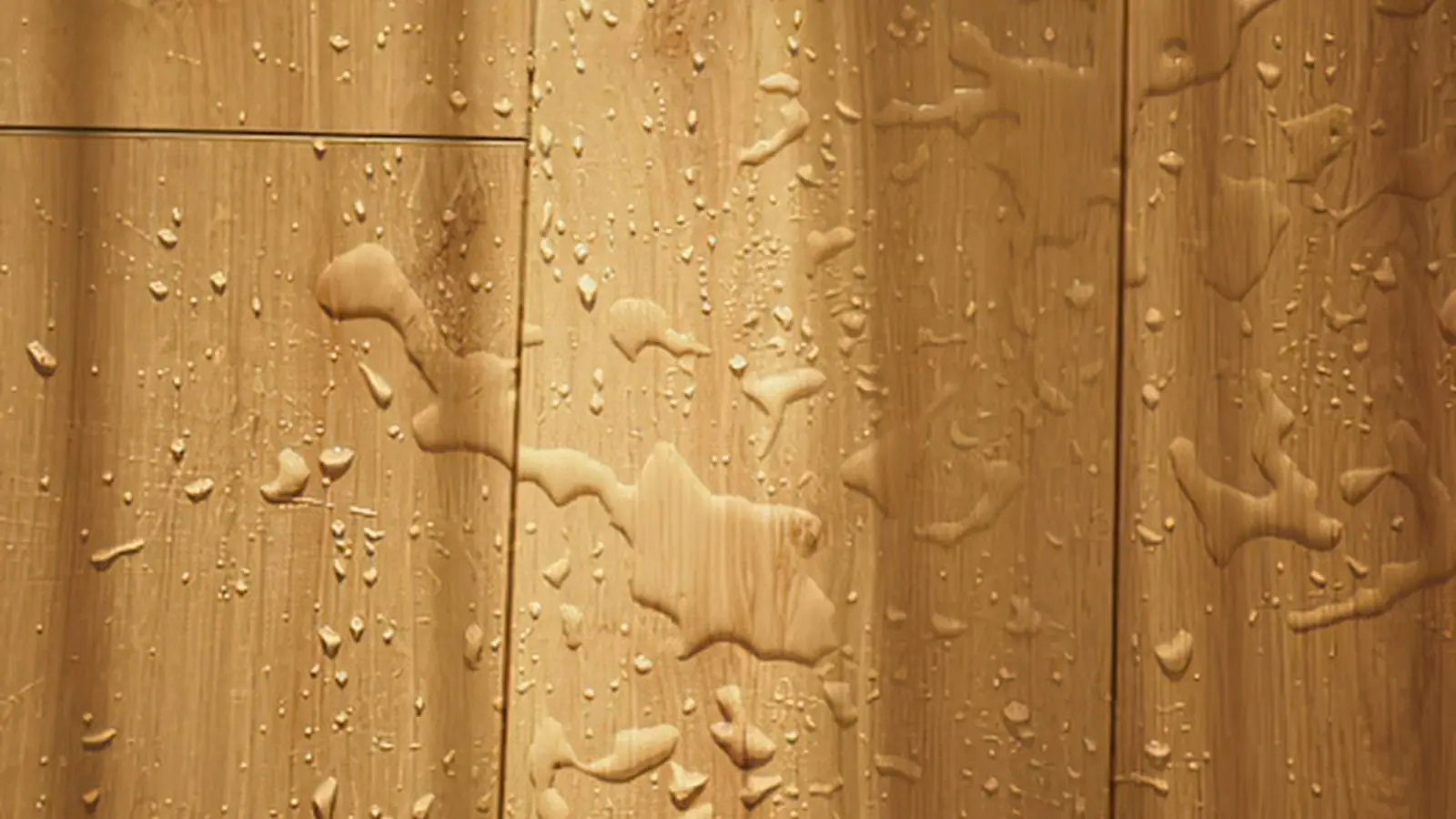
Water damaged hardwood floors in Tewksbury, MA give you a short window. Over the first couple of days, boards absorb water, swell and start to cup, and what you do then decides whether they dry in place or have to come up. Do not sand, seal or cover a wet floor. Stop the source, pull the standing water and get air and dehumidification moving.
This guide covers the early steps only. If you are already weighing sanding and refinishing, that is a later conversation, and it only makes sense once the wood has finished drying.
Cupping, crowning and buckling
Cupping means the edges of each board sit higher than the center, so the floor looks like a row of shallow troughs. It usually points to more moisture on the underside of the boards than the top. Crowning is the reverse, with the center raised, and often shows up when a cupped floor was sanded before it dried.
Buckling is the serious one. Boards lift away from the subfloor, sometimes in a ridge you can see across the room. It usually follows a lot of water or a long exposure, and it calls for a crew with moisture meters, not a weekend of box fans.
Symptom, likely cause and first action
| Symptom | Likely cause | First action |
|---|---|---|
| Edges rising, center low | Moisture from below or a long-running leak | Find the source, shut it off, take baseline moisture readings |
| Center rising after sanding | Floor sanded before it finished drying | Stop sanding, let a pro measure and dry before anything else |
| Boards lifting off the subfloor | Heavy water or extended soaking | Keep off the floor, call for extraction and mapping |
| Dark stains between boards | Water sat on the surface or seams | Photograph, extract, and avoid scrubbing |
| Musty smell with no visible water | Wet subfloor or cavity under the boards | Call for thermal imaging and a moisture check |
Why you must not seal or cover wet floors
A finish, a rug or a sheet of plastic over wet boards traps the moisture inside the wood. The boards keep absorbing, cupping gets worse, and the damp subfloor underneath has nowhere to dry. Mold needs moisture to grow, so a covered, damp floor is exactly the setup you want to avoid.
The same logic rules out heat guns and hair dryers. Fast surface heat can crack boards and leave the core wet. Slow, controlled drying with managed airflow is what protects the wood.
What to do in the first two days
Stop the source
Close the valve, fix the appliance or tarp the roof opening. Drying a floor that keeps getting rewet goes nowhere.
Remove standing water
Mop or wet-vac what you safely can. A crew uses extraction units that pull water out of seams as well as off the surface.
Clear the floor
Lift rugs, mats and furniture. Put foil or plastic blocks under furniture legs if pieces must stay.
Get air moving
Run fans across the floor and open a window if the air outside is drier than inside.
Pull humidity down
A dehumidifier is what actually removes moisture from the room. Fans alone just move wet air around.
Document and call
Photograph the damage, mark the worst cupped areas with tape, and call the 24/7 line for moisture readings.
Do not walk on a wet floor near outlets, power strips or appliances. If water reached a baseboard outlet, leave the room dry-side and call us. Cut power at the panel only if it is dry and reachable.
How crews dry hardwood
A crew starts with pin and pinless moisture meters, checks boards against an unaffected reference area, and scans with a thermal imaging camera to spot wet zones under the surface. Air movers are aimed to skim the floor, and LGR dehumidifiers pull the humidity out of the room.
Many jobs add floor drying mats, which are low-profile systems that draw moisture upward out of the boards by applying suction or airflow beneath a cover. Which method fits depends on the depth of water, the species and thickness of the boards, and whether there is a subfloor cavity to dry. Our water mitigation crews choose from these on site and record readings at each visit.
When boards can be saved and how to watch the cupping
Boards often come back when drying starts early, the water was clean and the floor was not sealed over. They are harder to save after long soaking, sewage or river water, or when mold has set into the underside. Solid planks tolerate drying better than many engineered floors, though the wear layer on engineered boards matters.
Watch the cupping over several days. Lay a straightedge across the boards, mark the position with tape and photograph it each morning. Cupping often eases as readings come down. A floor that stays cupped once readings match the dry reference may need sanding or replacement, which is where water damage repair picks up. Do not decide on the first day.
What drives the cost of floor drying
The factors are the water category, how many square feet are wet, the species and thickness of the boards, whether the subfloor is wet, how many days equipment runs and whether any boards must be replaced. Want your real number? Call (978) 252-8637.
What Tewksbury homeowners should know
The Shawsheen River runs through the southern end of Tewksbury, and the Concord River borders the southwest across from Chelmsford. If floor water came from a river overflow rather than a pipe, tell the dispatcher at the start. Flood water counts as Category 3 under S500, which changes how porous materials such as hardwood are handled.
Massachusetts guidance says areas exposed to leaks or floods should be dried within 48 hours. Treat that as your working clock for floors. If you are near the Shawsheen, the Wilmington page notes the gauge there hit a record 10.59 feet in March 2010. Across the Concord, Chelmsford residents face the same drying clock.
Common questions about this topic
Cupping is when board edges rise higher than the centers after moisture soaks in from below. It often eases as the wood dries, so measure and wait before sanding or replacing anything.
Often, if drying starts early and the water was clean. Long soaking, sewage or river water, and mold under the boards lower the odds. A moisture map from a crew tells you more than the look of the surface.
No. Sealing or covering a wet floor traps moisture, so cupping continues and the subfloor stays damp. Dry first, then decide on finishing.
Fans move air, but a dehumidifier removes the moisture. Deep boards and subfloors often need LGR dehumidifiers and sometimes drying mats. A moisture meter shows whether the floor is actually drying.
Buckling means a lot of water or a long exposure, and it needs a pro's readings quickly. Keep off the area, stop the source and call. Some buckled floors settle during drying, others do not.
If river water got in, tell the dispatcher, because it is treated as Category 3. Ask for a crew that works to ANSI/IICRC S500, and keep photos of the water line for your insurer.